speaking & learniing
Future thinking shouldn't be a spectator sport!
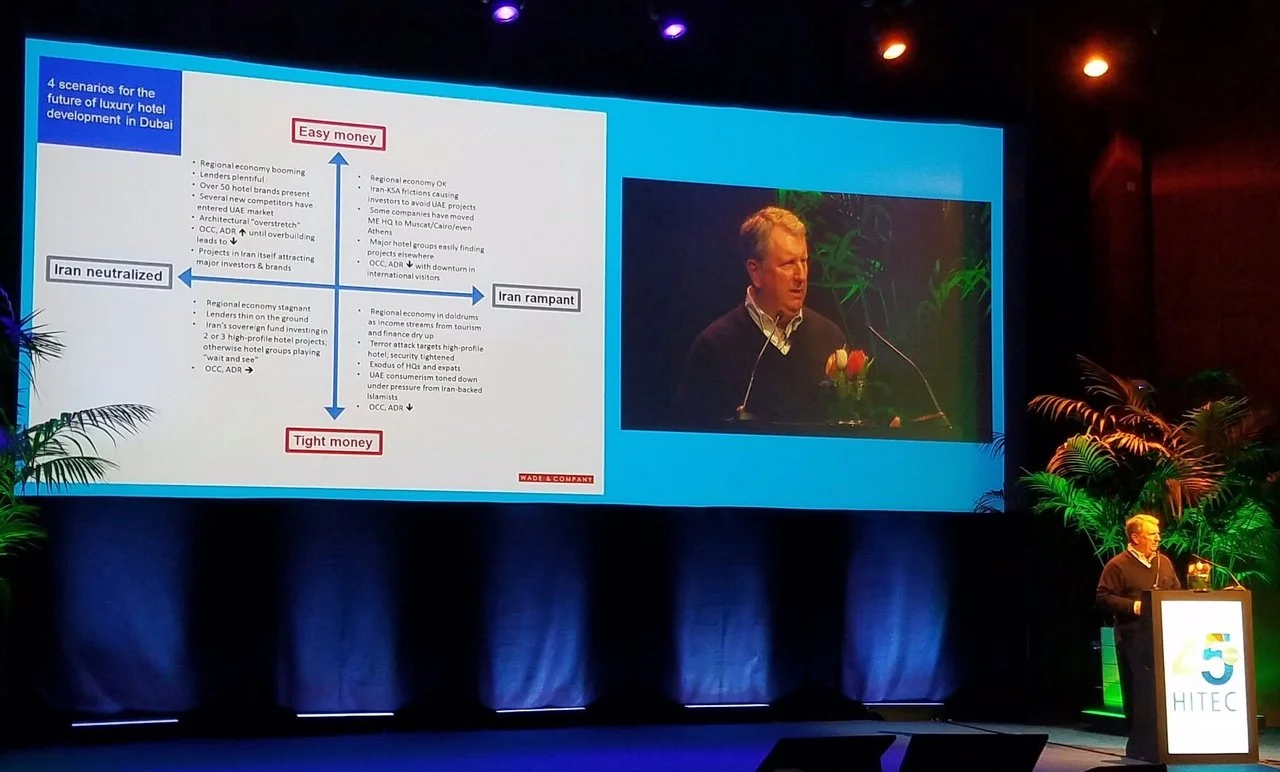
My keynotes, Master Classes and executive-education sessions are designed to get people thinking, questioning, and participating — not simply listening to another presentation about how fast the world is changing.
Whether I'm working with an entire conference audience or a small executive group, my aim is the same:
➔ Make uncertainty interesting. ➔ Make the future discussable. ➔ Give people something they can use.
KEYNOTES & CONFERENCE SESSIONS
Make them think. (And keep them awake!)
I speak about scenario thinking, strategic uncertainty, and the assumptions we make about the future, adapting the subject and examples to the interests of each audience.
These are not lectures about predicting what's coming next. They're provocative, interactive sessions designed to make people question the future they are implicitly expecting.
Depending on the occasion, a session might explore emerging uncertainties, challenge conventional thinking about an industry's future, introduce scenario thinking, or simply ask some unusually difficult “What if?” questions.
The best outcome? People are still talking about the questions afterwards.
"Woody's talk was highly motivational, and I can say that he is ranked among the best speakers I have ever encountered."
- Eirini Giorka, Mediterranean Hotel Investment Forum, Cyprus
“Thought-provoking, well planned and delivered.”
- Khalid Hilal Al Yahmadi, CEO, Muscat National Development and Investment Company, Oman
MASTER CLASSES & EXECUTIVE EDUCATION
Learn how to think in scenarios.
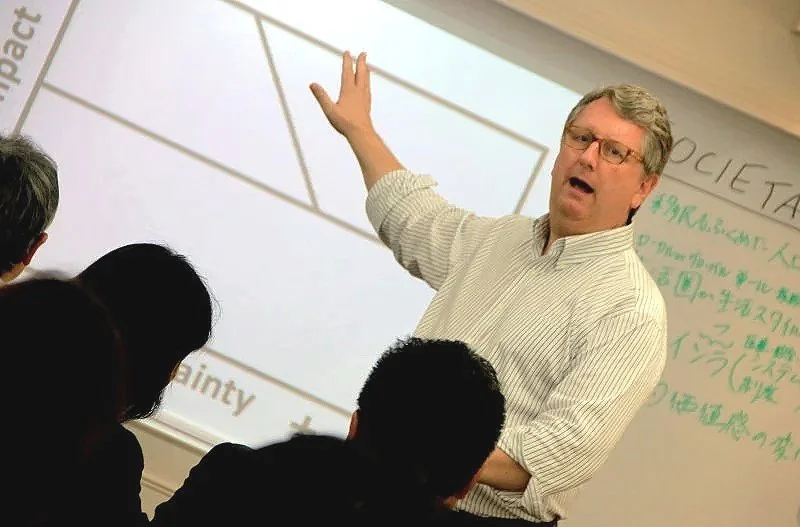
For executives and teams who want to understand scenario planning and use it themselves, I offer practical Master Classes and customized executive-education sessions.
A typical 2–3 hour Master Class takes participants step-by-step through the process:
Identify the forces shaping your future → isolate the critical uncertainties → construct alternative scenarios → explore their implications → identify signposts to watch.
The emphasis is practical. Participants don't just hear about scenario planning; they work with the ideas and begin applying them to questions relevant to their own organization.
Longer executive-education programs can go further, giving participants the opportunity to develop and test scenarios themselves.
TEACHING
From boardroom to classroom
I've taught scenario planning to executives, leadership teams, and students internationally, including designing master's-level university courses and customized corporate programs.
Teaching the method has also sharpened the way I use it: if people are going to apply scenario thinking themselves, the process has to be rigorous enough to be useful — and simple enough to remember.
CONTINUING ON YOUR OWN
Want to explore the ideas at your own pace?
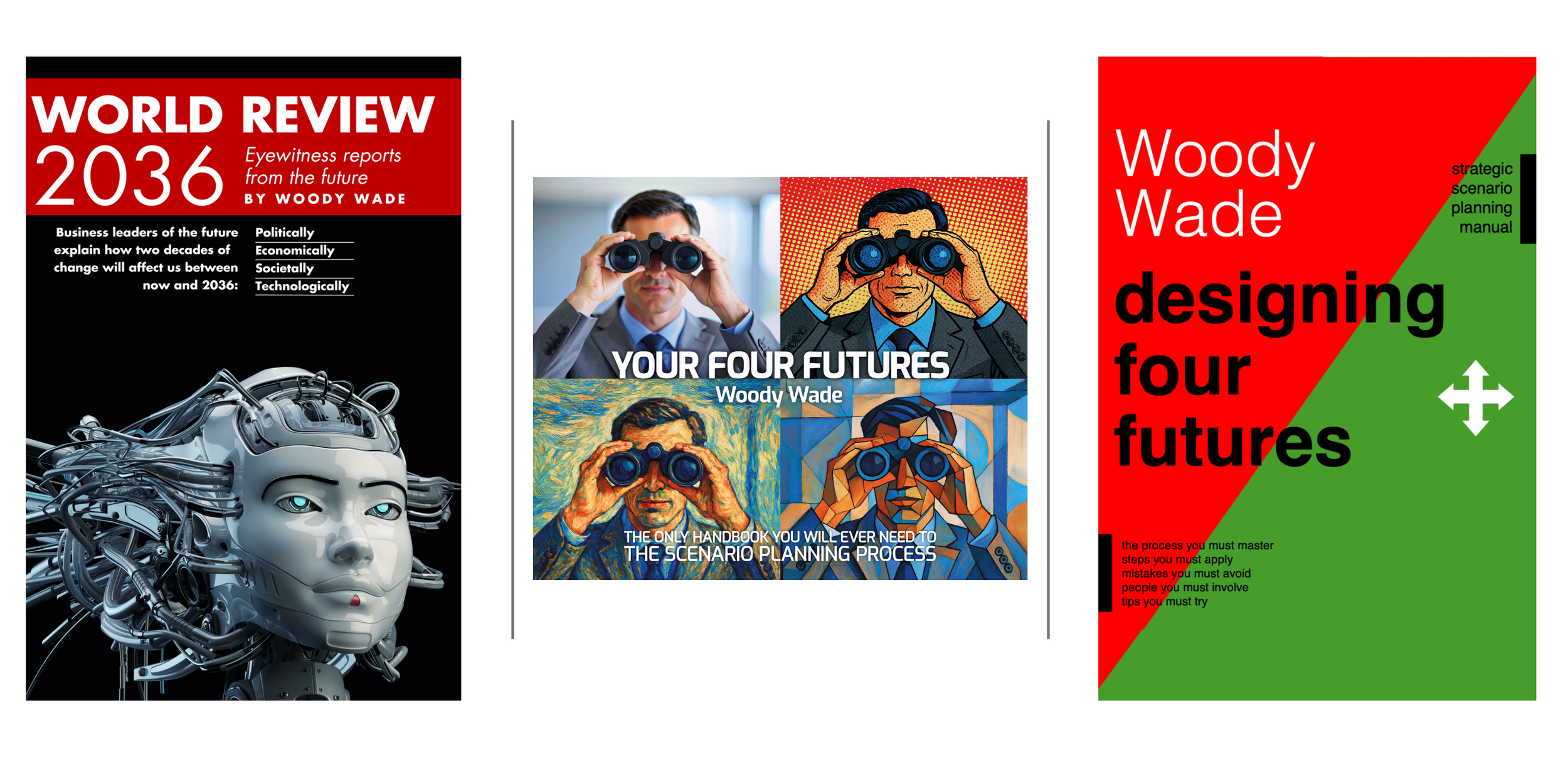
I've written several books and practical guides not just exploring scenario planning, alternative futures, and how we think about what might lie ahead, but also explaining the process so you can apply it on your own.
Whether you want an introduction to the methodology, a practical step-by-step working guide, or examples of scenario thinking in action, you can explore the full collection in my online bookshop.
THINKING ON PAPER
Books give me room to follow a “What if?” further than a conversation might allow. Whether practical guides or imagined futures, they all start with curiosity.
WHAT WOULD YOU LIKE PEOPLE TO BE THINKING ABOUT DIFFERENTLY WHEN THEY LEAVE ?
Whether you're planning a conference, leadership meeting, Master Class, or executive learning program, tell me a bit about the audience and what you'd like this session to accomplish,